Michigan State University Athletics

11/19/2026 11:57:00 AM | Varsity S Club
During a recent walk around campus, I paused in front of the John Hannah statue outside the Hannah Administration Building and reflected on how little I knew about the 12th President of Michigan State College. Curious to learn more, I decided to dig a little deeper and share my findings with you.
Most people recognize him as the 12th president of Michigan State, a role he held from July 1, 1941, to April 1, 1969. His presidency coincided with a period of immense growth for the university, both in terms of physical expansion and enrollment.
John Hannah was born just south of Grand Rapids and spent his early years on a farm, where he was tasked with caring for the family’s chickens. After graduating from high school, he began his undergraduate studies at Grand Rapids Junior College before transferring to the University of Michigan. Initially, Hannah pursued a law degree at Michigan, but he soon discovered his passion for poultry husbandry. He became quite skilled in the field and, during his free time, worked as an educator for Michigan farmers. In the 1921-1922 academic year, a representative from Michigan State’s Agricultural Extension and Poultry Department visited the University of Michigan. The representative offered Hannah a position at Michigan State, along with the opportunity to earn a degree in agriculture. Hannah accepted and completed his bachelor’s degree at Michigan State College just a year later.
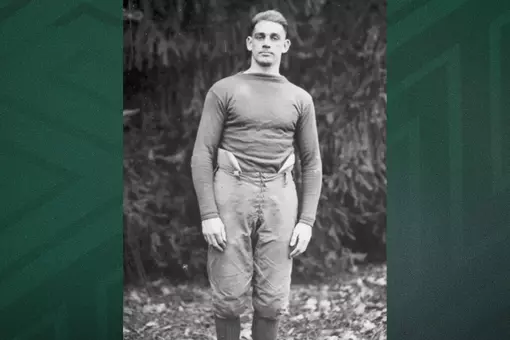
During his time at Michigan State, Hannah developed a deep admiration for the Spartan football team. Back then, athletes did not receive scholarships or compensation for their extracurricular activities, and Hannah, who had an apartment, offered a helping hand. He allowed a few athletes to live with him in exchange for assistance with cooking and cleaning.
After graduating with a BS in 1923, Hannah worked in the poultry industry before returning to Michigan State in 1934 as the Secretary of the State Board of Agriculture, the governing body of the university. He held this position until he was elected president. While he had other job offers, Hannah’s loyalty to the college far outweighed any financial incentives. As Secretary of the Board, he worked closely with the state legislature to secure funding through the Works Progress Administration and kept the State Board of Agriculture informed about the needs of the East Lansing campus. During this time, the boundaries of the university were formalized, and more than 7,000 acres of land were acquired, shaping Michigan State’s campus as we know it today.
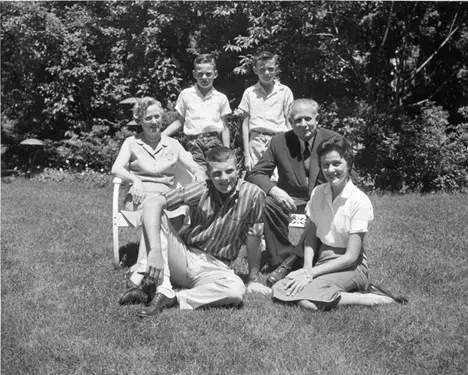
Hannah married Sarah May Shaw, daughter of the 11th president of Michigan State, Robert Shaw, on June 22, 1938. The couple had four children—Mary, Robert, Thomas, and David—with the three youngest born during his presidency.
Hannah served as president from 1941 to 1969, a period during which university enrollment skyrocketed from 6,000 to nearly 40,000 students. This rapid growth was accompanied by extensive physical expansion of the campus and significant upgrades to the curriculum. Hannah is credited with establishing an international program in the 1950s and launching a medical program in the 1960s.
Under his leadership, numerous campus buildings were constructed, including Hubbard Hall, the Administration Building, Berkey Hall, the Natural Science Building, the Psychology Building, the Alumni Chapel, the Computer Center, and the Library. Additionally, residential housing in Case Hall was opened as a co-ed dormitory. The first of it’s kind on the East Lansing campus.
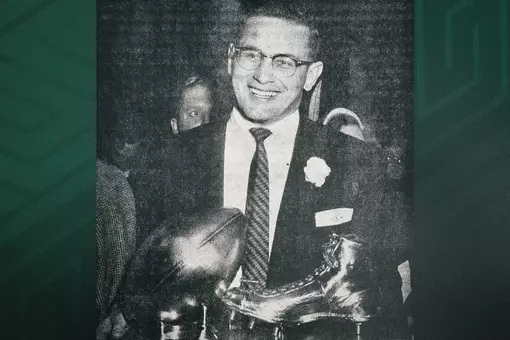
In 1946, Hannah was named an Honorary Varsity S Club member, the first person to receive this honor. One of his greatest achievements, however, was his steadfast determination to secure Michigan State’s entry into the Big Ten Conference. When that finally occurred in 1948, students flooded the streets of East Lansing in celebration.
In the 1950s, the University of Michigan repeatedly approached Hannah to gauge his interest in leading their institution. However, he remained committed to Michigan State. From 1952-1954, while still MSC president, he was the Assistant Secretary of Defense for manpower and personnel. President Eisenhower charged him with the responsibility of completing the full racial integration of the military. In addition, he opened the US Airforce Academy in Colorado. During this period he would spend 5 days a week in Washington and return to East Lansing on the weekends to attend to university business.
Hannah would also be awarded the Medal of Freedom for his work in civil rights by President Eisenhower in 1954. The award is the nations highest civilian award and awarded by the President of the United States. It is to recognize “any person who had made an especially meritorious contribution to (1) the security or national interests of the United States, or (2) world peace, or (3) cultural or other significant public or private endeavors.
In 1955, during MSU’s centennial, he, along with Milton Eisenhower (the Penn State University president) arranged to have both colleges achieve university status. In 1957, President Eisenhower appointed Hannah to be the Chairman of the newly formed US Civil Rights Commission. He continued in that position under Presidents Eisenhower, Kennedy and Johnson. The work of the commission contributed to the 1964 Civil Rights Act.
After leaving MSU in 1969, he was appointed to run USAID in the Nixon administration. Later under the Ford administration, Secretary of State Henry Kissinger tasked Hannah with the establishment of the World Food Council through the UN. The result of his work was the creation of the World Food Program which is vitally important today.
In 1969, Coach Duffy Daughtery in a tribute to President Hannah, retired football jersey number 46 in honor of his 46 years of service to the University, including 28 as its President. Former Spartan coach George Perles once said, “John Hannah is the greatest legend in the history of Michigan State. He is the person who made MSU the great school it is today.”
At the dedication of the John A. Hannah statue on September 17, 2004, then-President Peter McPherson remarked, "What a wonderful morning on the beautiful campus of John Hannah’s university."
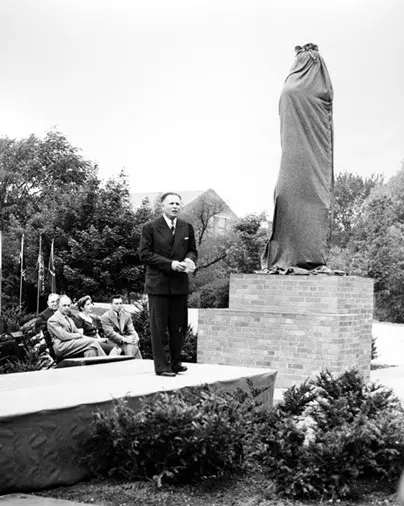
Unveiling the Spartan statue at it's dedication ceremony on June 9, 1945. President Hannah asked Assistant Professor of Sculpture Leonard Jungwirth to take on the project in 1941 - an idea that AD Ralph Young had after vising USC and seeing their Trojan statue. Jungwirth spent 2 years working on it after work and on weekends and without extra pay.

I recently had the privilege of meeting Thomas Hannah, John's son. He returned to campus along with his freshman year roommate and sons to celebrate their 80th birthday. Thomas' roommate and sons came from Germany to see campus for the first time since their graduation in the 1960s.